
(She/Her/Hers)
3-8 Years | 9-12 Years | 13-18 Years | 18+ | Family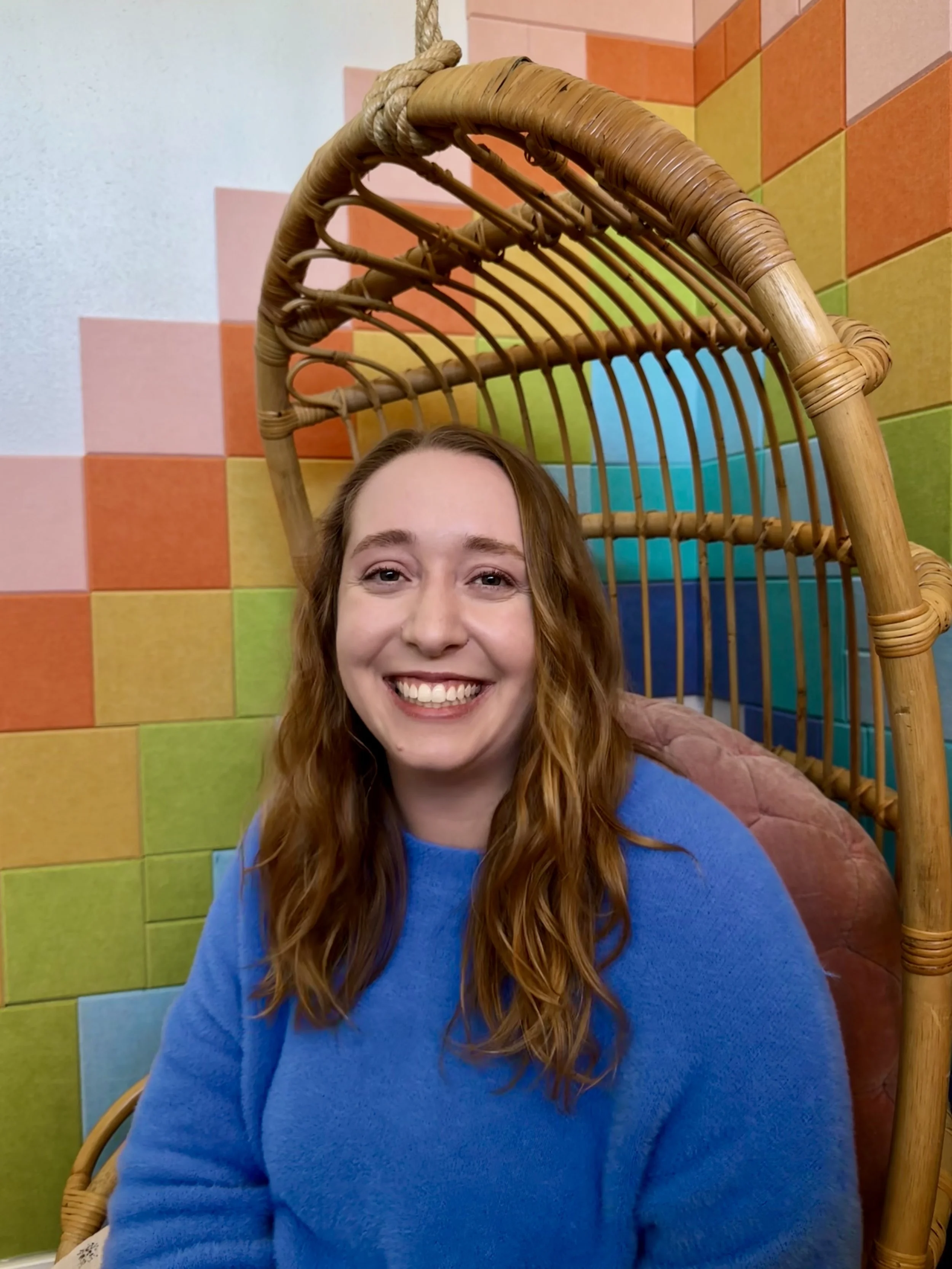


RACHEL IS PARTICULARLY WELL-SUITED TO SUPPORT FAMILIES:
Who are struggling with emotional regulation and externalizing behaviors (tantrums, big emotions).
Who are interested in developing healthy relationships.
Who want to understand the role the brain plays in behavior and emotions.
RACHEL’S FAVORITES:
Favorite board game: Azul
Favorite ice cream flavor: Superman Ice Cream
Favorite animal: Stingray
Favorite children’s book: Chrysanthemum by Kevin Henkes
Favorite color: Light pink
Favorite place in Austin: In a kayak on the lake
Favorite holiday: New Year’s Eve
I feel happiest when: I’m playing board games with my family or playing with my dog
If I had a superpower it would be: The ability to freeze time
Place I feel most safe/calm/comfortable: Sitting with my dog, reading, and having a hot drink (preferably apple cider, but I like tea too)
MORE ABOUT RACHEL:
Rachel believes that play therapy allows children to externalize their experiences in a way that grants them safety to process these events and grow from them. In sessions with Rachel, children learn self-regulation, problem-solving, and coping skills as they navigate play scenarios that mirror real-life challenges. Over time, the child is able to generalize these skills, building resilience and confidence. She knows that play therapy empowers children to develop emotional independence and self-assurance in a gradual, supportive manner.
Through Rachel’s person-centered approach, she emphasizes empathic understanding and unconditional positive regard. Her approach to counseling establishes relational conditions that guide clients to improve their self-awareness, reach their goals, and meet their needs. She knows that every person’s lived experience molds them into who they are, and therefore regards the client as the expert. Rachel aims to support families by collaborating with the child and key figures in their life to cultivate healthy relationships.
Originally from Michigan, Rachel has lived in Austin since 2009 and loves to spend time outdoors and trying new restaurants. She also enjoys spending time with her husband and dog, reading, and playing board games.
Rachel Esparza is a Licensed Professional Counselor and Registered Play Therapist. At Texas State University, Rachel earned her master’s degree in professional counseling (CACREP Accredited Program) and her bachelor’s degree in psychology. She has experience working with children, adolescents, young adults, and families in community counseling settings.
RACHEL WORKS AT OUR BERKMAN AND SPICEWOOD OFFICE LOCATIONS AND OFFERS VIRTUAL SESSIONS. ALL SESSIONS ARE 45 MINUTES UNLESS OTHERWISE NOTED. HER RATES ARE THE FOLLOWING:
Individual Session $200
Initial Consult, Parent Consult, Parent Coaching $225
Family Session $250
AREAS OF SPECIALIZATION:
Adjustment to change & transition
Anger management / Irritability
Anxiety / Excessive worry / Perfectionism
Behavioral issues / School behavior
Bullying / Discrimination / Racism
Conflict resolution / Communication
Coping skills for big emotions
CPRT - Child Parent Relationship Therapy
Depression
Friendship / Peer relationships
LGBTQIA2S+
Neurodivergence
Neurodivergence: Autism
Neurodivergence: Learning Disability
Parenting / Discipline / Setting Boundaries
School Avoidance
Self-esteem
Sibling conflict / Sibling rivalry
Sleep concerns / Insomnia
Stress management
READ MORE ABOUT RACHEL’S PASSION:




Our childhood experiences can play a powerful role in shaping who we become. Early events impact the way we think, what we believe about ourselves and others, how we manage stress, and how we form relationships. Researchers have identified both adverse childhood experiences (ACEs) and positive childhood experiences (PCEs) that impact adult mental health.