



Every child's path looks different, here's how we walk it with them.
No two kids need the exact same thing, so this is the full range of tools we might draw from, based on what your child needs:
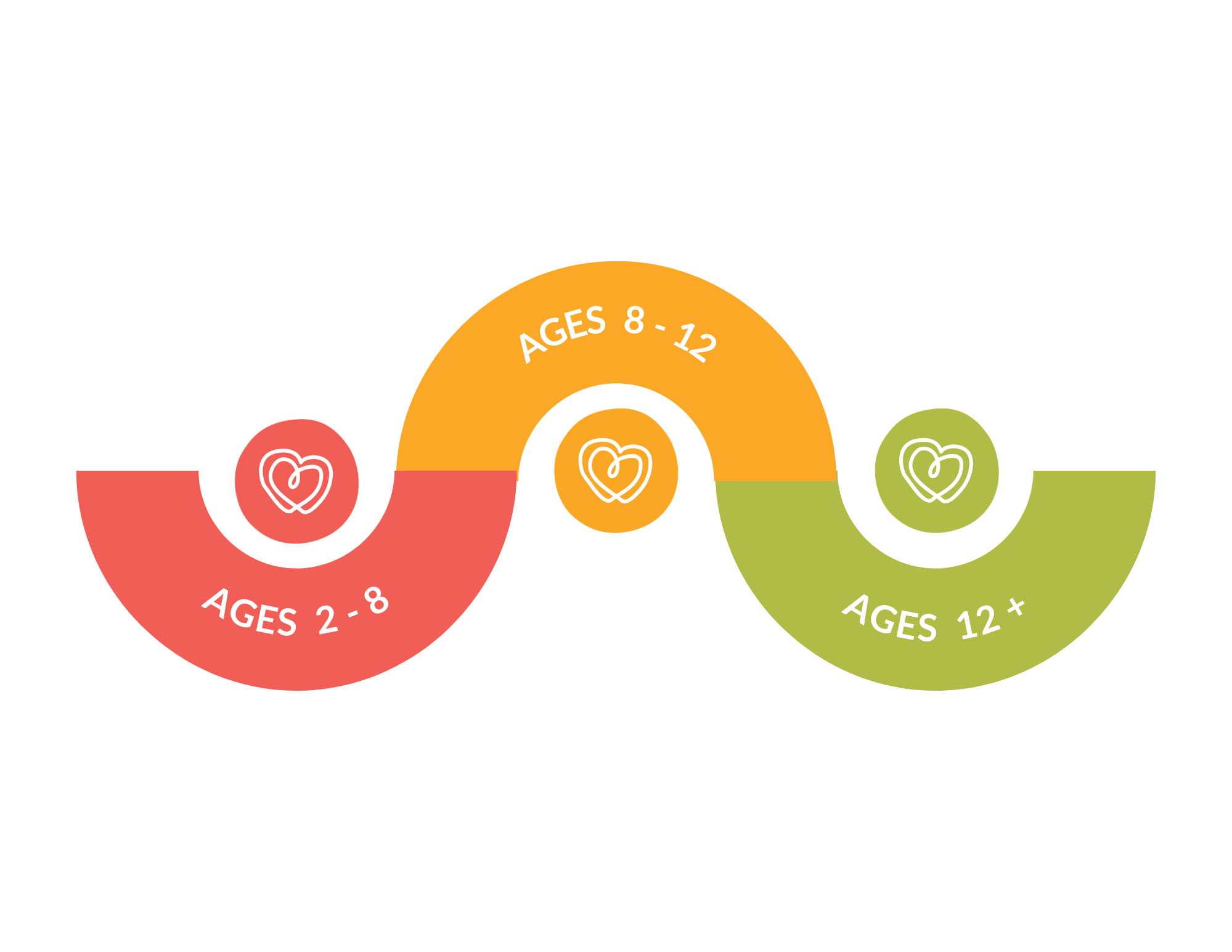
Mostly play therapy and parenting focus, family play therapy
Play therapy, sandtray therapy, therapeutic use of board games, expressive arts and puppets, activity therapy, collages, writing, movement, music, talk therapy, traditional family therapy
Play therapy, sandtray therapy, therapeutic use of board games, expressive arts and puppets, activity therapy, family play therapy

PLAY THERAPY
Play is how children naturally communicate, long before they have the words for what they're feeling. We use play and other non-verbal approaches to help build confidence, trust, and connection. Learn more about the science-backed evidence for why play therapy works.
THERAPY WITH EXPRESSIVE ARTS
Sometimes paint, clay, or collage says what words can't yet. We use art media to help children express themselves, work through what feels hard, and build a stronger sense of self.
SAND TRAY THERAPY
A sand tray and a handful of miniature figures can become a whole world, one where a child can externalize relationships, work through conflict or trauma, and discover their own sense of mastery. Learn more in our Playing in the Sand blog.
EMDR
Sometimes the brain gets stuck holding onto difficult experiences. EMDR helps children and teens gently process what feels hard, so the past can feel more like the past and the present can feel more manageable. At Ensemble, EMDR is adapted to meet each person where they are, including through play and creative approaches for children.
GROUP THERAPY
There is something powerful about realizing you're not the only one figuring it out. Group therapy gives children and teens a space to practice new skills, build connection, and learn alongside others who understand some of what they're going through.
TALK THERAPY
For those ready for open, honest conversation, talk therapy creates space to name what's weighing on them and build real strategies for moving through it, together.
BIBLIOTHERAPY
Stories have a way of saying "you're not alone" better than we sometimes can. We use children's literature to normalize what a child is going through and gently introduce new ways of problem-solving. Explore recommended titles on our Bibliotherapy page.
OCCUPATIONAL THERAPY
Growing up is its own full-time job, and sometimes a child's mind-body connection needs extra support to keep up with it. Occupational therapy helps build the skills, fine motor function, personal care abilities, sensory processing, and emotional regulation, that make daily life, school, and play feel more possible.
THERAPEUTIC ROCK CLIMBING
Sometimes the best way to work through something is to get moving. Therapeutic rock climbing combines the challenge of climbing with the support of therapy to build confidence, emotional regulation, problem-solving, and a stronger sense of "I can do hard things."
SOCIAL COMMUNICATION GROUPS
Friendships and communication can be complicated. Our Social Communication Groups give children a supportive place to practice reading social cues, navigating conversations, solving friendship problems, and building the skills that help connection feel a little easier.


The tools we might lean into together.
Every child comes to us with their own story, their own pace, and their own way of making sense of the world. Below are some of the approaches our therapists draw from, thoughtfully chosen and often blended, to support your child wherever they are.
Hear from our therapists themselves about what it’s like to be in a session with them.



Did another professional refer you?
If another professional recommended that you seek out support for one of the following, know you are in the right place:
Child Centered Play Therapy
Adlerian Play Therapy
Filial Therapy
Gestalt Play Therapy
Cognitive Behavioral Play Therapy
Ecosystemic Play Therapy
Theraplay
Developmental Play Therapy
Jungian Play Therapy
We think of Play Therapy as the umbrella that holds all of these underneath it.
We know you’re part of this too.
Supporting your child means supporting your whole family. Here are ways we walk alongside you, the caregivers, parents, and people who show up for your child every day.